
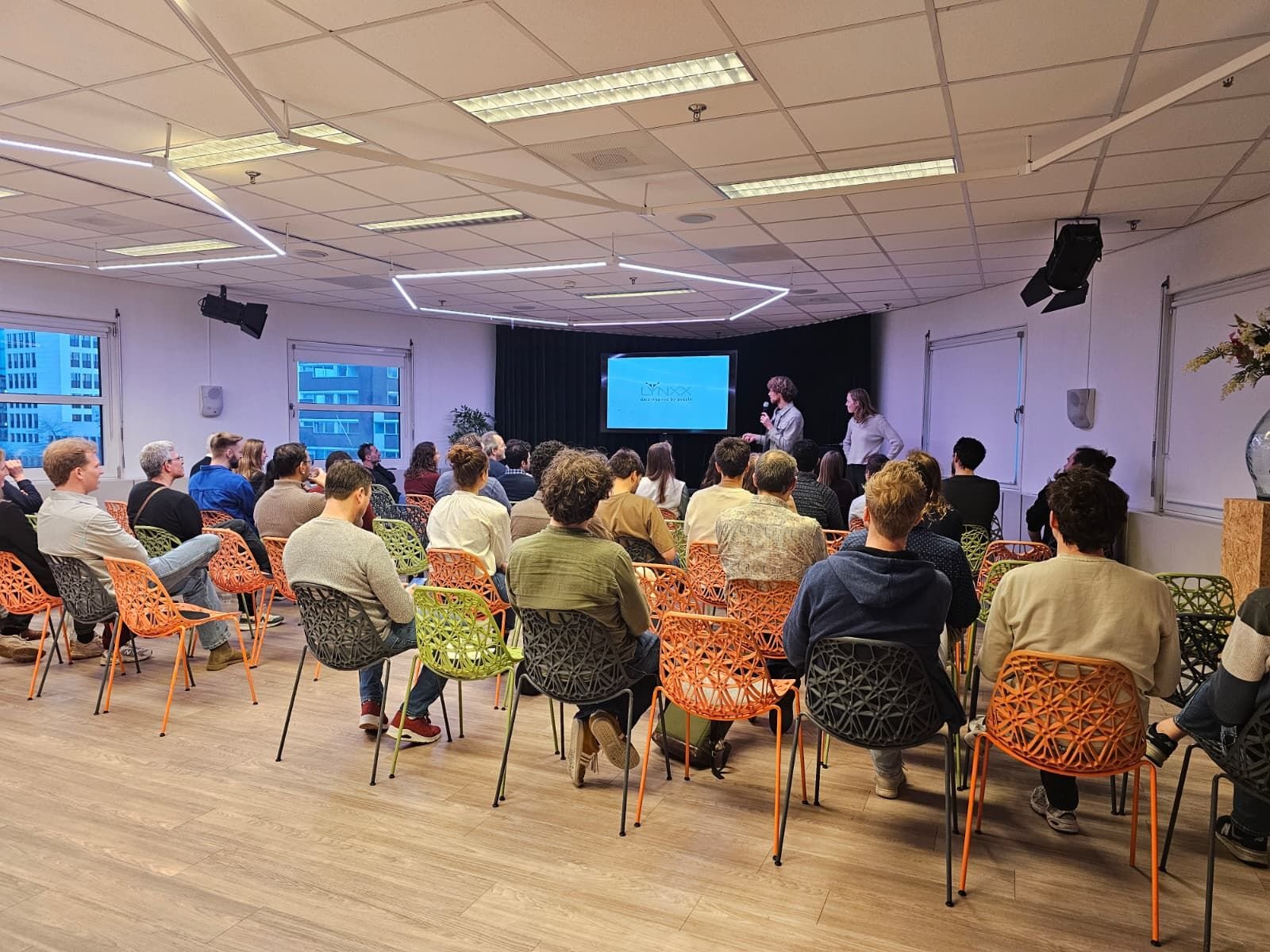
We are thrilled to announce our next meetup on Thursday, March 12, 2026, hosted by Lynxx!
This edition dives deep into Operations Research and large-scale optimization algorithms. We will explore how complex logistical puzzles, from railway disruptions to aircraft assignments, are solved using mathematical models and Python.
Whether you are an Operations Research expert, a Data Scientist, or a Python engineer interested in solver integration, you’ll walk away with practical insights on building robust scheduling systems at scale.
Optimizing a national network takes more than just a clean mathematical formula. It requires bridging the gap between theoretical constraints and the chaotic reality of daily operations. In this meetup edition, we are peeling back the layers of high-stakes Operations Research to see how heavy-duty schedules are actually built, solved, and maintained.
This evening goes beyond the textbook basics of linear programming. We’re diving into the engineering challenges of building solvers in Python that are fast, robust, and capable of handling massive scale. From creating alternative timetables to allow for railway maintenance to solving the complex puzzle of aircraft assignments, you’ll discover the architectural decisions—and the necessary trade-offs—that turn raw mathematical models into operational efficiency.
Excited as well?! We'd love to welcome you for an evening full of knowledge sharing, deep technical dives, and of course great conversations, networking, and a fun evening with the community!
Talk 1: RAAD: a Timetable optimizer build in Python
By Merel Groen & Robin Weber
RAAD is an optimization tool developed by Lynxx for ProRail. RAAD can quantify the impact of service disruptions on the railway network and the consequences for an alternative timetable, balancing between the different railway operators. In this presentation, we will further elaborate on the developed codebase, with special attention to the class structure, performance, solver integration, and more!
Merel Groen is a Data Scientist at Lynxx, where she specializes in optimizing operational processes through analytical problem-solving. She joined the team in 2023, starting her journey by writing her Master's thesis in Econometrics on industry-relevant challenges. At Lynxx, she leverages her background to dive into complex logistical details, translating theoretical models into practical solutions for rail and transport networks.
Robin Weber is a Data Scientist at Lynxx, where he specializes in shaping and delivering complex Operations Research projects. Before joining Lynxx in 2022, he worked as an Operations Research Scientist at Dassault Systèmes. With a strong academic background in Econometrics and Operations Research from the University of Groningen, Robin combines deep theoretical knowledge with practical application to solve intricate logistical puzzles.
Talk 2: The optimization engine behind tail assignment
By Tessa van Kleef
In this session, I’ll show how a mathematical optimization model transforms the complex tail assignment puzzle, i.e., deciding which aircraft operates which flight, into a fast, automated, and robust process. By integrating operational constraints, maintenance needs, and fuel considerations, the model delivers more efficient schedules while saving planners significant time.
Tessa van Kleef is an Operations Research Specialist at Transavia, where she focuses on optimizing airline logistics and planning. With a strong background in mathematics and aviation, she specializes in solving complex operational puzzles like aircraft tail assignment. Her work bridges the gap between theoretical models and real-world flight schedules, ensuring efficiency and robustness in daily airline operations.